Contract Structure
This page explains how MP Technology structures its agreements across the Master Services Agreement, Service Orders, and service-specific product terms.
A practical explanation of how the governing agreement, service-specific commercial terms, and supplemental service rules work together.
Last Updated: April 23, 2026
This page is provided for general reference and is intended to help clients understand how MP Technology organizes its service agreements. It does not replace the terms of any executed contract.
MP Technology structures its client agreements so that the core legal relationship is established once, while the commercial details and service-specific requirements can be defined separately as needed. This approach keeps agreements more organized, reduces duplication, and makes it easier to add, modify, or retire services over time without rewriting the entire governing contract for each change.
In general, the agreement structure is made up of three components: the Master Services Agreement, one or more Service Orders, and, where applicable, service-specific product terms.
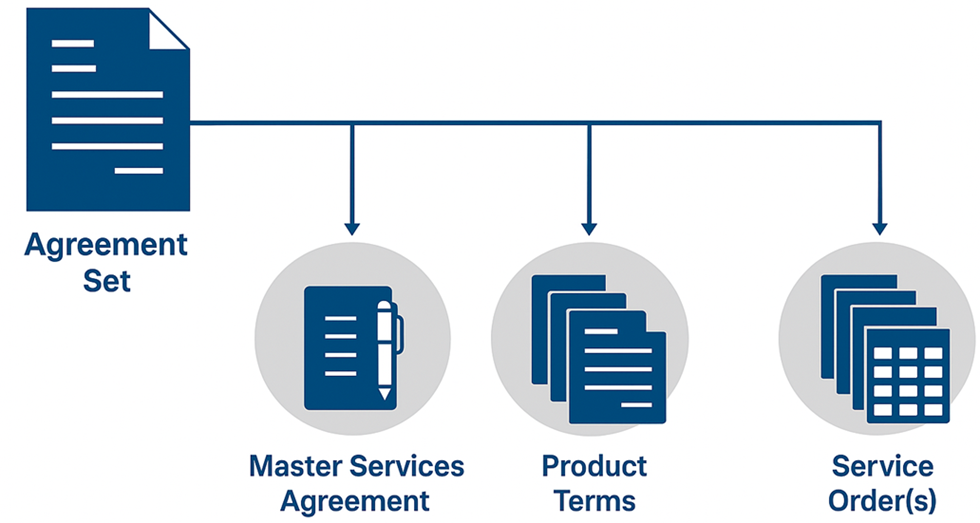
1. Master Services Agreement (MSA)
The Master Services Agreement, or "MSA," is the foundational agreement between MP Technology and the client. It sets the overarching legal and commercial framework that applies across the relationship.
Depending on the engagement, the MSA may address topics such as:
- the general scope of the business relationship;
- payment framework and invoicing principles;
- confidentiality obligations;
- intellectual property treatment;
- warranties and disclaimers;
- limitation of liability and indemnification concepts;
- term and termination rights; and
- other core legal provisions that should apply consistently across services.
The MSA is not typically where detailed service scope, project timing, pricing, or operational specifics are defined. Instead, it creates the contract foundation that later service-specific documents can rely on.
2. Service Orders
A Service Order is the document that defines the commercial and operational specifics of a particular engagement. A client may have one Service Order or multiple Service Orders over the life of the relationship depending on the services being delivered.
Service Orders commonly identify items such as:
- the services being provided;
- the service model or offering category;
- pricing, recurring charges, hourly rates, or quoted project charges;
- term length or engagement dates;
- included deliverables or service components; and
- other service-specific commercial details.
Where the MSA provides the governing framework, the Service Order is typically where the actual business arrangement for a specific service is documented.
3. Product Terms
Some services may also include product terms, service-specific terms, or other supplemental rules. These documents are used where a service has unique operational, billing, support, security, access, or use conditions that should be documented separately rather than embedded into the MSA itself.
Examples may include:
- on-demand service terms;
- remote support terms;
- service-specific acceptable use restrictions;
- platform or support limitations; or
- other offering-specific requirements.
Not every engagement requires separate product terms. When they do apply, they supplement the MSA and the applicable Service Order rather than replacing them in full.
4. How These Documents Work Together
At a high level, the documents are intended to work together in a layered way:
- the MSA establishes the base legal relationship;
- the Service Order defines the specific service engagement and commercial details; and
- the Product Terms add any service-specific rules that apply to that offering.
This structure allows MP Technology to keep the governing agreement cleaner and more durable while still documenting service-specific requirements where they belong.
5. Order of Precedence
Unless otherwise stated in the applicable agreement set, the governing intent is generally that the MSA controls the overall legal framework, the Service Order controls the specific service engagement details, and product terms control only the specific service-level provisions they are intended to address.
If two documents address the same issue in different ways, the executed agreement language and any expressly stated order-of-precedence rules will govern.
6. Why This Structure Is Used
This structure is intended to provide clarity and flexibility. It allows clients to add new services, adjust scope, or introduce service-specific rules without renegotiating the entire governing contract each time the service relationship evolves.
It also helps separate long-form legal terms from service-specific commercial details and operational requirements, which generally results in cleaner documentation and more maintainable agreement sets over time.